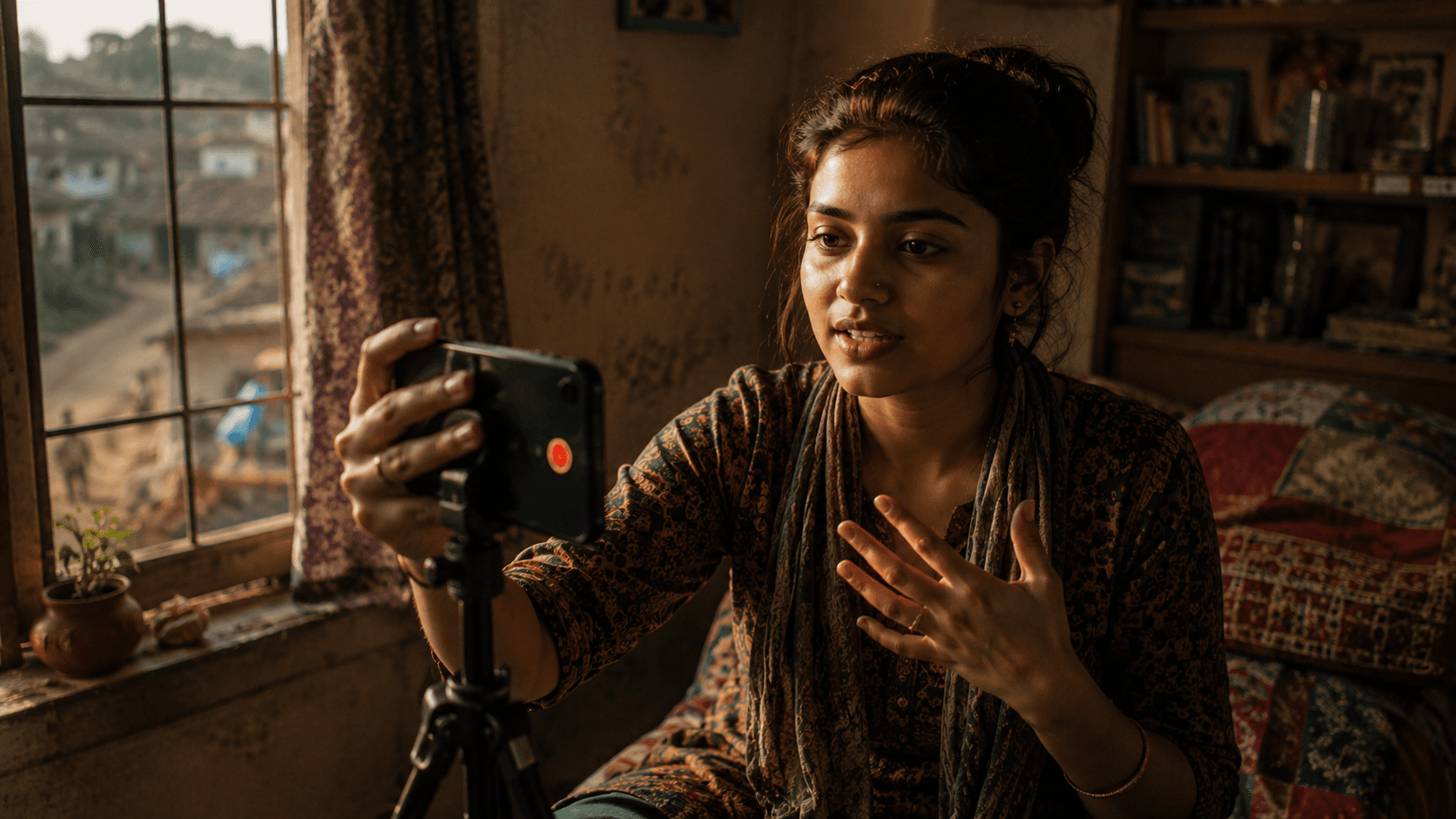
The Conversation I Have Had 15 Times: Oh, Like YouTube?

A transcript of a very common conversation
Me: "We are building a video platform for Indian vernacular creators that pays from the first video."
Person: "Oh, like YouTube?"
Me: "Not quite like YouTube. YouTube pays you almost nothing if your audience speaks a language other than English. Hindi content CPM is Rs 20 to 60. English content on the same platform is Rs 150 to 400."
Person: "Oh. So like TikTok then?"
Me: "TikTok is banned in India. Also, TikTok does not really pay Indian creators either. Also TikTok is banned."
Person: "Right. Okay. So like Instagram Reels?"
Me: "Instagram does not pay creators. It uses creator content to keep users on Instagram and then monetises those users through advertising. The creator is the raw material, not the beneficiary."
Person: "What about Moj? Josh? Chingari?"
Me: "They attracted volume after the TikTok ban. The monetisation architecture for creators was never the primary design principle. They have been fighting for survival against Instagram Reels more than solving the creator income problem."
Person: "So what is it actually like?"
Me: "It is what you would get if you designed a video platform where creator monetisation was the starting constraint, not an afterthought. Where the revenue model was built for a market where ad CPM alone cannot support creator income. Where the subscriber threshold before you earn anything is zero."
Person: "Oh. That is a big gap."
Yes. That is exactly why we are building it.
Why the comparisons keep coming
The "like YouTube" question is not lazy. It is the natural cognitive shortcut for a space that does not have an obvious incumbent. When you are describing a new product, people reach for the most familiar reference point. The reference point for "video platform" is YouTube. For short video, it is TikTok or Reels. For "Indian video," it is Moj or Josh.
The problem is that MeTubez is not trying to compete in any of those existing categories on those existing terms. It is trying to solve a different problem: the structural monetisation failure of vernacular content creators in India.
When you are solving a problem that existing products have not solved, the comparison questions are actually a useful signal. They tell you that the market does not yet have a mental category for what you are building. That is either a problem or an opportunity, depending on how you think about it.
Why the problem does not have an obvious incumbent
The reason no dominant platform has solved creator monetisation for vernacular Indian content is not that nobody noticed the gap. It is that solving the gap requires a different monetisation architecture, not just a different interface.
YouTube's architecture is built around advertising CPM. The CPM gap between English and vernacular content is not a YouTube preference; it is a reflection of what international premium advertisers will pay to reach specific audiences. YouTube cannot fix the CPM gap without restructuring its relationship with global advertisers. That is not a problem they are going to solve for the Indian vernacular market.
Instagram's architecture is built around the platform capturing the value that creators generate. Paying creators directly would mean sharing revenue that currently flows entirely to Meta. That structural incentive does not change.
The indigenous platforms lack the monetisation infrastructure and, increasingly, the scale to build it from scratch.
The gap is real. The incumbents have structural reasons not to fill it. And the gap is big enough, 50 million creators, 600 million vernacular content consumers, to justify building something specifically for it.
What MeTubez actually is
MeTubez is a video platform built under Twenties Entertainment Pvt. Ltd. since 2019. We hold a WIPO PCT international patent on the core technology. We have a Government of India grant.
The core design principle: monetisation starts from video one, regardless of subscriber count, language, or whether a global advertiser considers your audience premium.
We are building the infrastructure for the 50 million creators who are creating content that India watches every day and earning almost nothing from it.
Not like YouTube. Not like TikTok. Not like Instagram. Built specifically for the problem that none of them are solving.
If you are an investor who has been thinking about this space and wondering whether anyone is actually building the infrastructure layer, the answer is yes. And the conversation is worth having.